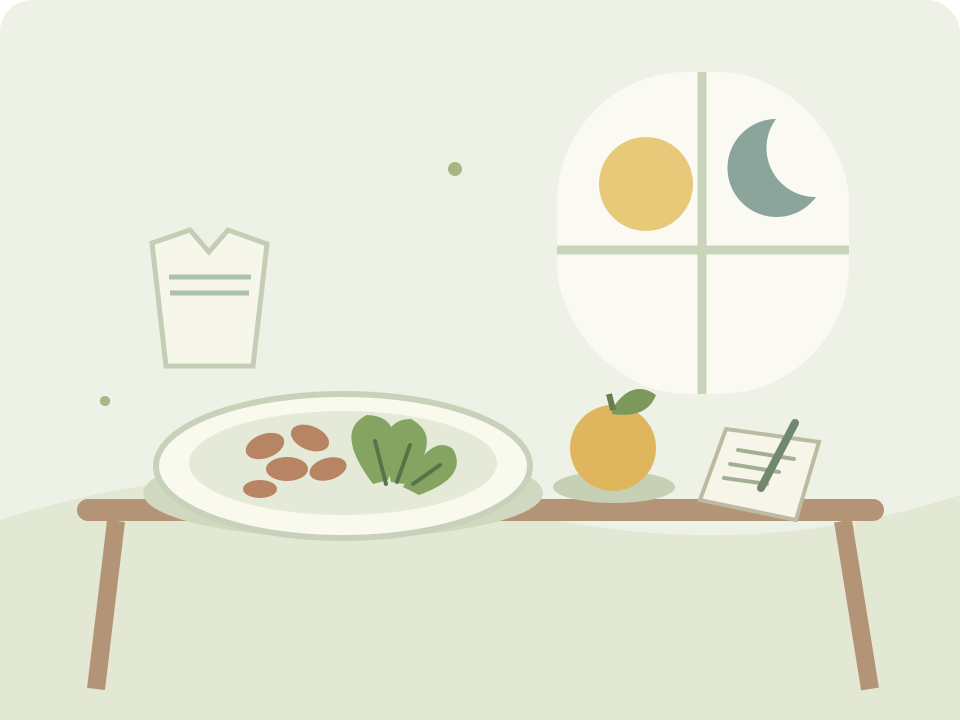
Perhaps lunch was a sandwich between meetings. Perhaps a cup of tea took the place of a proper break. By evening you are exhausted, but bedtime keeps moving further away. Does that feel familiar?
There is no perfect routine to copy here. We will look at affordable additions to ordinary meals, the part iron can play, and how to make room for rest. Vegetarian and vegan meals can be part of that conversation too.
Tiredness alone cannot tell you that you need iron. Poor sleep, stress, medicines and health conditions are among the possible explanations. Treat this article as a starting point for noticing patterns, not a diagnosis. [1]
Three things to keep in mind
- Feeling tired does not automatically mean iron deficiency.
- Heavy periods, meal patterns and sleep are worth discussing together.
- Check whether iron is needed before starting supplements.
01Start with your day, rather than a shopping list.
When did the tiredness begin? Is it getting worse? Does it stop you doing things you normally manage? A few notes can help explain what has changed. You do not need a wearable device or a carefully scored wellness diary.
Think about whether meals are being missed and whether caring responsibilities, shifts or worries are cutting into sleep. Asking someone to share a task may create more breathing space than adding another health task to your list.
Enough food and useful additions to ordinary meals.
Time asleep and how rested you feel.
Bleeding, medicines and when to seek advice.
02Low iron and anaemia are related, but different.
Iron helps make haemoglobin, which carries oxygen in red blood cells. Your iron stores can fall before haemoglobin becomes low. Iron deficiency and iron-deficiency anaemia are therefore not interchangeable terms. Anaemia also has causes other than iron deficiency. [2]
A GP may arrange a full blood count and, when appropriate, tests of iron stores such as ferritin. Ferritin can be affected by inflammation, so a result needs clinical interpretation. A previous normal blood count is not a reason to ignore ongoing symptoms; neither does it prove you have ‘hidden’ iron deficiency. [2]
03Heavy periods deserve a conversation.
Periods that require very frequent changes of protection, disturb your nights or get in the way of life are worth mentioning to a GP. Do not assume you simply need to eat more spinach. Finding out why you are losing blood matters as well. [3]
Take a note of bleeding changes, any restrictive diet, medicines and previous results. If you are pregnant or have recently given birth, raise unusual exhaustion with your midwife or GP. New bleeding after menopause also needs medical advice. [3]
04Build on a meal you already eat.
A more useful question than ‘What is the best iron food?’ can be ‘What could I add to lunch?’ Tinned pulses, frozen vegetables and suitable fortified foods offer options without requiring a completely new way of cooking.
Plant iron is absorbed differently from the iron in meat and fish. Pairing plant sources with vitamin C-containing food can help absorption. Check labels on fortified cereals: different products contain different amounts. [4]
Try beans with tomatoes or a pepper side dish.
Add lentils or chickpeas to a bowl, with vegetables and fruit.
Choose an iron-fortified cereal if suitable, check the label and add fruit.
Combine vegetables with fish, lean meat or pulses and your usual starchy food.
These are meal ideas, not a treatment plan or a guarantee of meeting your iron needs. You do not have to eat meat to make a thoughtful meal, and choosing a plant-based diet does not by itself establish that you are deficient.
Tea and coffee can reduce iron absorption when taken with a meal. If this is relevant to your iron status, move your cuppa between meals. You need not ban tea, cut out whole food groups or blame a single drink for your tiredness. Ask a pharmacist about timing if you take prescribed iron. [3][4]
05Rest needs time in the diary, too.
Being in bed is not always the same as being asleep. Notice waking in the night, how rested you feel in the morning and sleepiness during the day. A late-night film or a scrolling session can feel like your only personal time; the aim is to make space for yourself without leaving sleep until everything else is done.
Keep a reasonably regular waking time and a calm wind-down routine. Look at late caffeine, including energy drinks, and avoid relying on alcohol to get to sleep. If you work shifts, discuss what is workable rather than aiming for a routine designed for a different working day. [5]
Aim for a consistent waking time.
Notice caffeine timing and make room for manageable activity.
Give a shared task or a screen a finishing time.
Loud snoring, gasping at night or persistent daytime sleepiness warrant a conversation with a GP. Do not assume a supplement will solve a sleep problem. [1]
06One change is enough to begin.
Choose one manageable step below. A short record of meals, sleep, periods and how tired you feel can make an appointment easier. A better day alone does not prove that a particular food or supplement caused the change.
These tick boxes are for reflection, not diagnosis or scoring. The site does not save or send your selections.
07You do not have to finish fixing your routine before seeking help.
Speak to a GP if unexplained tiredness lasts for a few weeks, is worsening or affects daily life. Mention other changes, including weight loss, mood or bleeding. Assessment can happen alongside everyday changes. [1]
Avoid stacking iron products or taking high doses on a hunch. Excess iron can be harmful and can interact with medicines. Prescribed iron can also cause bowel symptoms: ask your prescriber or pharmacist for help rather than stopping or altering the dose yourself. Keep iron medicines securely out of children’s reach. [3][4]
Seek urgent help when needed
Chest pain, severe breathlessness at rest, collapse or heavy uncontrolled bleeding need urgent medical help. Call 999 for a medical emergency; do not wait to see whether food or supplements help. [6]
08A few questions before you go.
Can I diagnose low iron from dizziness?
No. Dizziness and tiredness have several possible causes. Seek advice about persistent or troublesome symptoms rather than using them as a supplement checklist. [1]
Should I eat liver every day?
You do not need to rely on one food. Avoid liver and liver products during pregnancy because of their high vitamin A content; discuss pregnancy nutrition with your care team. [7]
What if iron tablets make me constipated?
Tell your prescriber or pharmacist. They can advise on the treatment; do not change or stop it on your own. General fibre information is not a substitute for that conversation. [3]
Your wellbeing can have a place in the diary.
A proper lunch, an earlier finish to a shared task, or a conversation with a GP: each is a valid next step. You do not have to earn rest by finishing everything first.
Choose your small step ↑Sources and editorial information
Written by the operator using the resources below, checked on 26 October 2026. Inclusion does not mean these organisations endorse this site or any products. Meal suggestions are editorial examples for everyday UK food choices, not nutritionally calculated menus.